AI Capacity Management
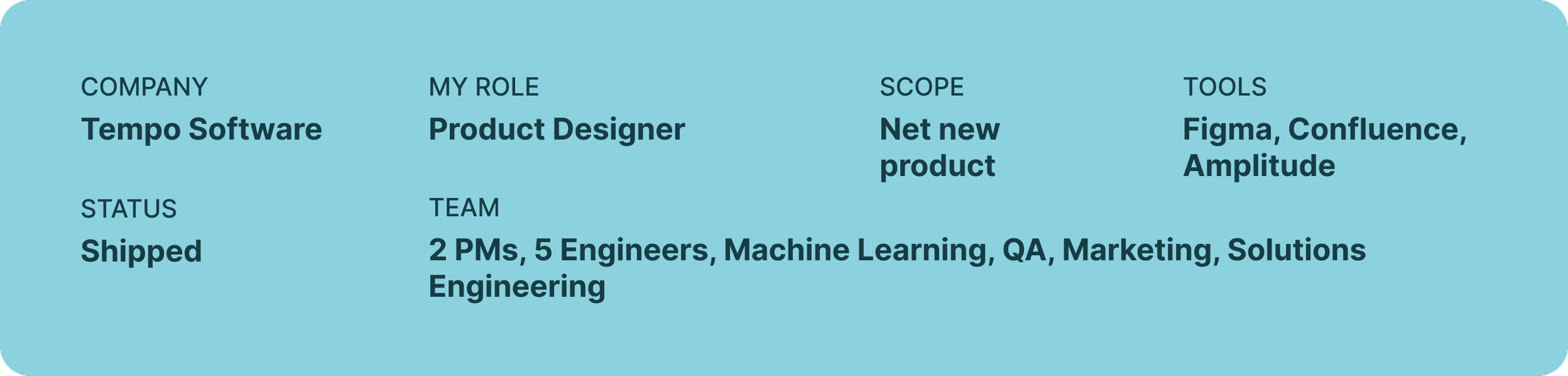
A net new product that was launched on the Atlassian marketplace to provide insights into team capacity based on AI automated work entries
Problem
Enterprise customers lack actionable and reliable insights on what their teams are working on because users hate logging time.
Solution
Capacity Insights presented an opportunity for Tempo to expand beyond time tracking into strategic planning by addressing a key customer pain point: understanding team capacity across multiple projects and timeframes. As organizations scaled agile practices, they needed clearer visibility into future availability to plan work more effectively. By introducing AI-driven insights, Tempo could differentiate its product suite, deepen engagement with existing customers, and open new revenue streams in the strategic portfolio management space.
The situation
Tempo's strength was time tracking. Tempo Timesheets had become one of the most widely used time tracking apps in the Atlassian marketplace, and Tempo's Capacity Planner gave teams a way to plan workload at the project level. Customers had years of logged time data and clear visibility into what had already happened.
But the question enterprise customers were asking had shifted. They weren't asking "what did this team work on last quarter." They were asking "what is this team going to be working on next quarter, and do we have the capacity to take on the new initiative." That's a strategic planning question, not a time tracking question. The answer wasn't in the product.
According to our Chief Strategy Officer, Capacity management was projected to grow from $1.55B in 2018 to $6.65B by 2032, a 4.3x increase in demand. For Tempo specifically, that translated to a $150M ARR opportunity, modeled against capturing 500 enterprise and 1,000 mid-sized customers. Tempo also had two advantages most new entrants didn't: years of logged time data sitting in customer instances, and existing relationships with the buyers.
Capacity Insights was the bet to convert all of that into a strategic planning product, not just a reporting one.

The strategy
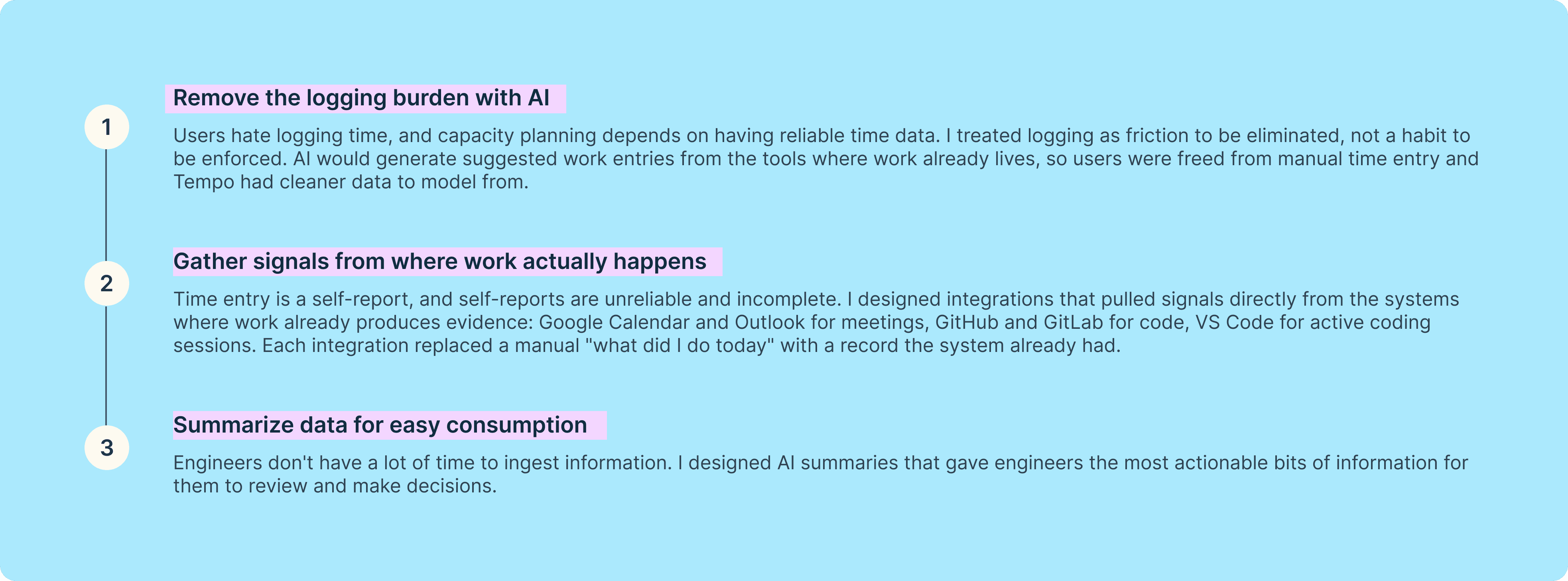
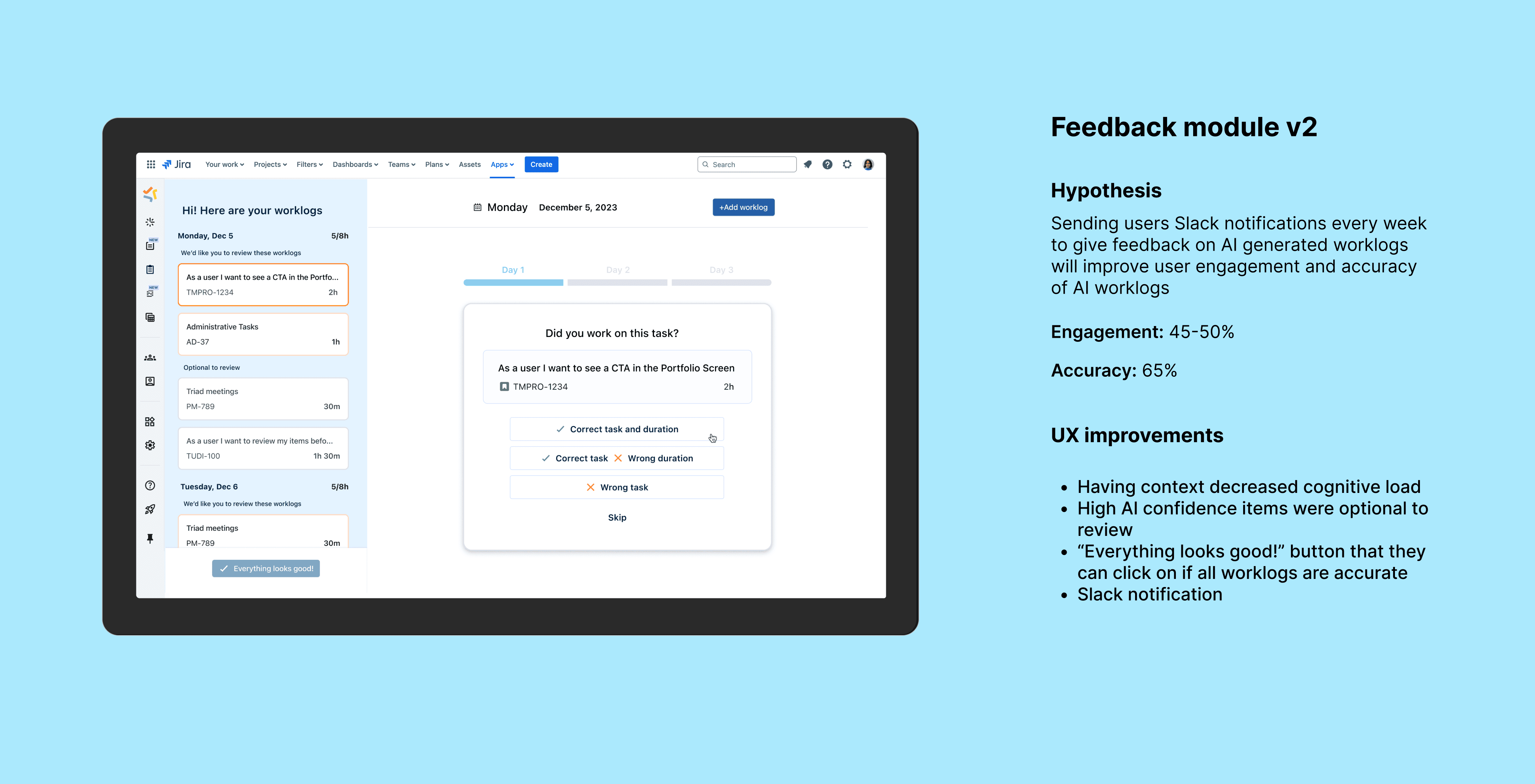
AI needed to remove the logging time burden, integrations had to gather signals from where work actually happens and summaries would help users get a high-level overview of the time the AI had logged. Users could give feedback based on what they saw in the summary and this would train the AI model to make better predictions.
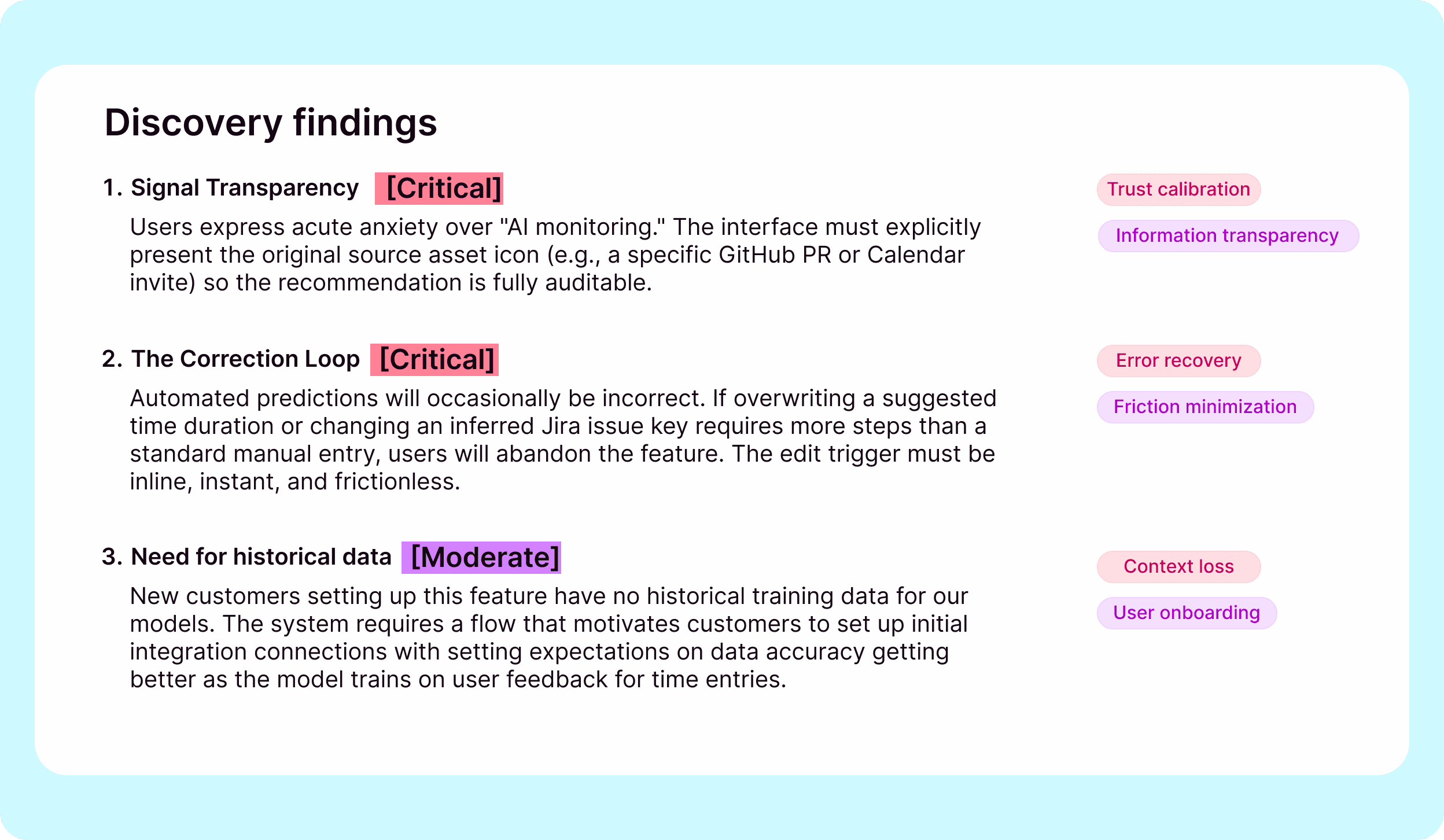
Discovery findings
I conducted discovery interviews with current Timesheets users to understand their workflows and major pain points. This helped me understand their mental models to create a concept that I showed the same users in follow up calls to get feedback and iterate on.
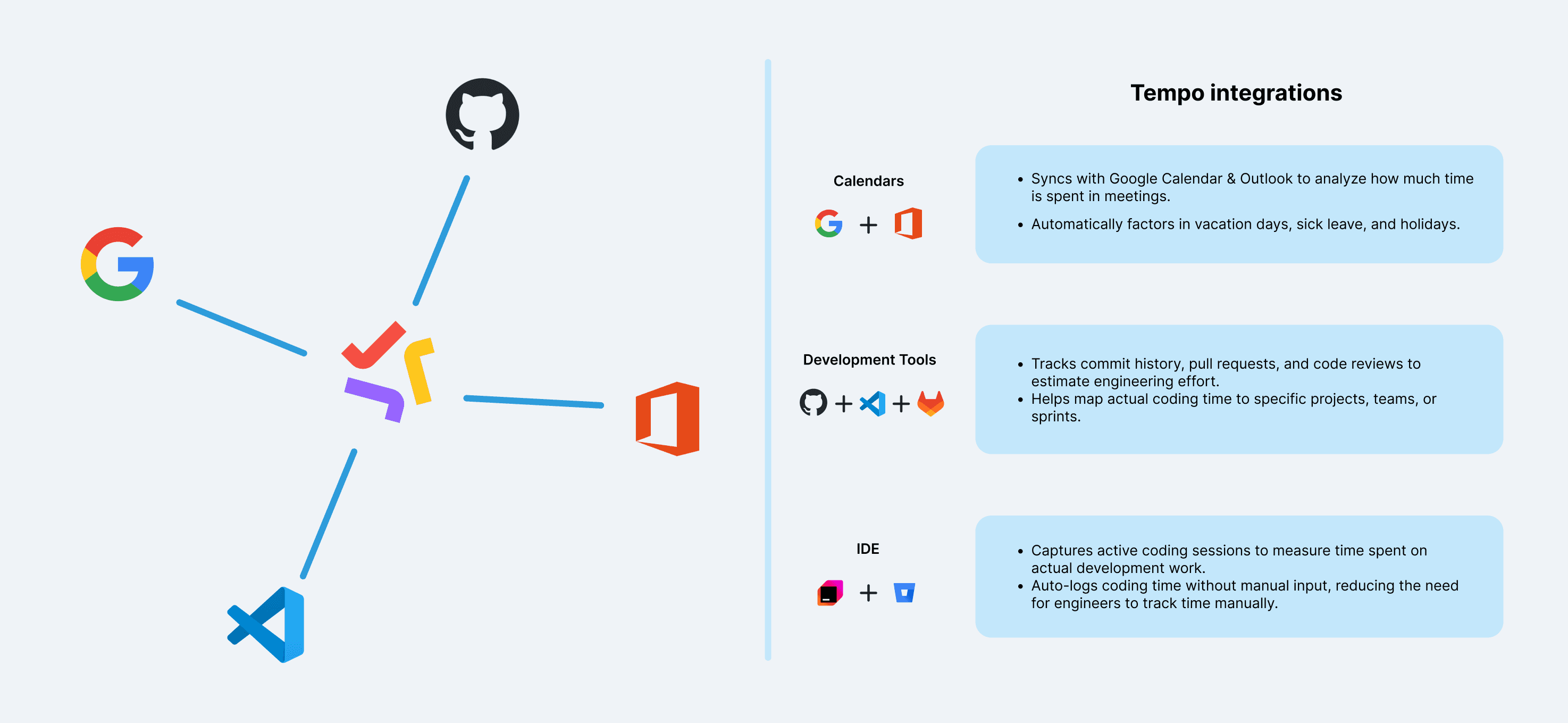
Leverage Integrations
We decided to leverage Timesheets by Tempo’s integrations to help users get a better picture of the work they did thanks to integrations with Google Calendar, Office 3655, Github and VS Code (to name a few).
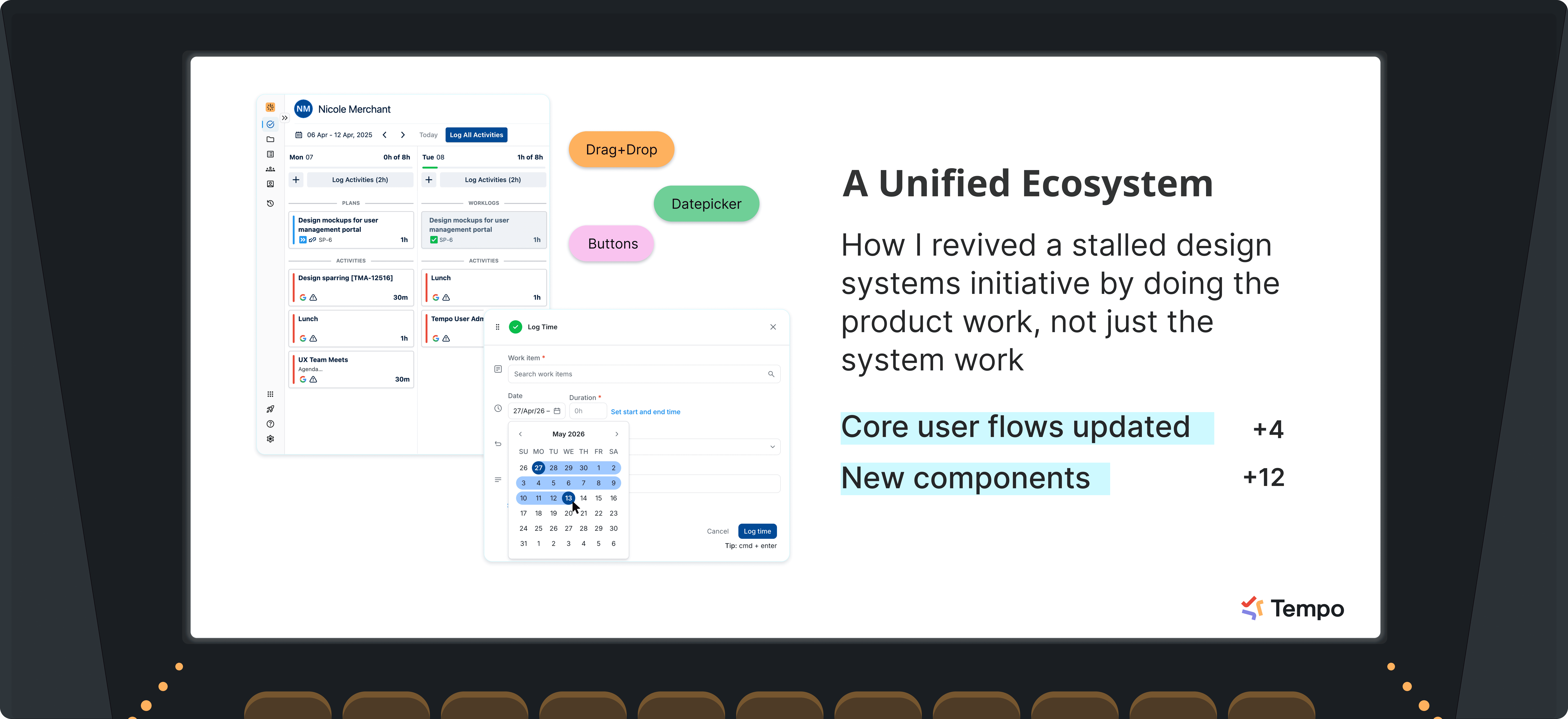
In order to tackle a major pain point that was identified from enterprise customers, we released organization-level integrations, where an admin can enable integrations for the entire organization or specific Tempo Teams that they choose.
This reduced the burden for individual contributors as they no longer have to manually go in and enable each integration in their instance.
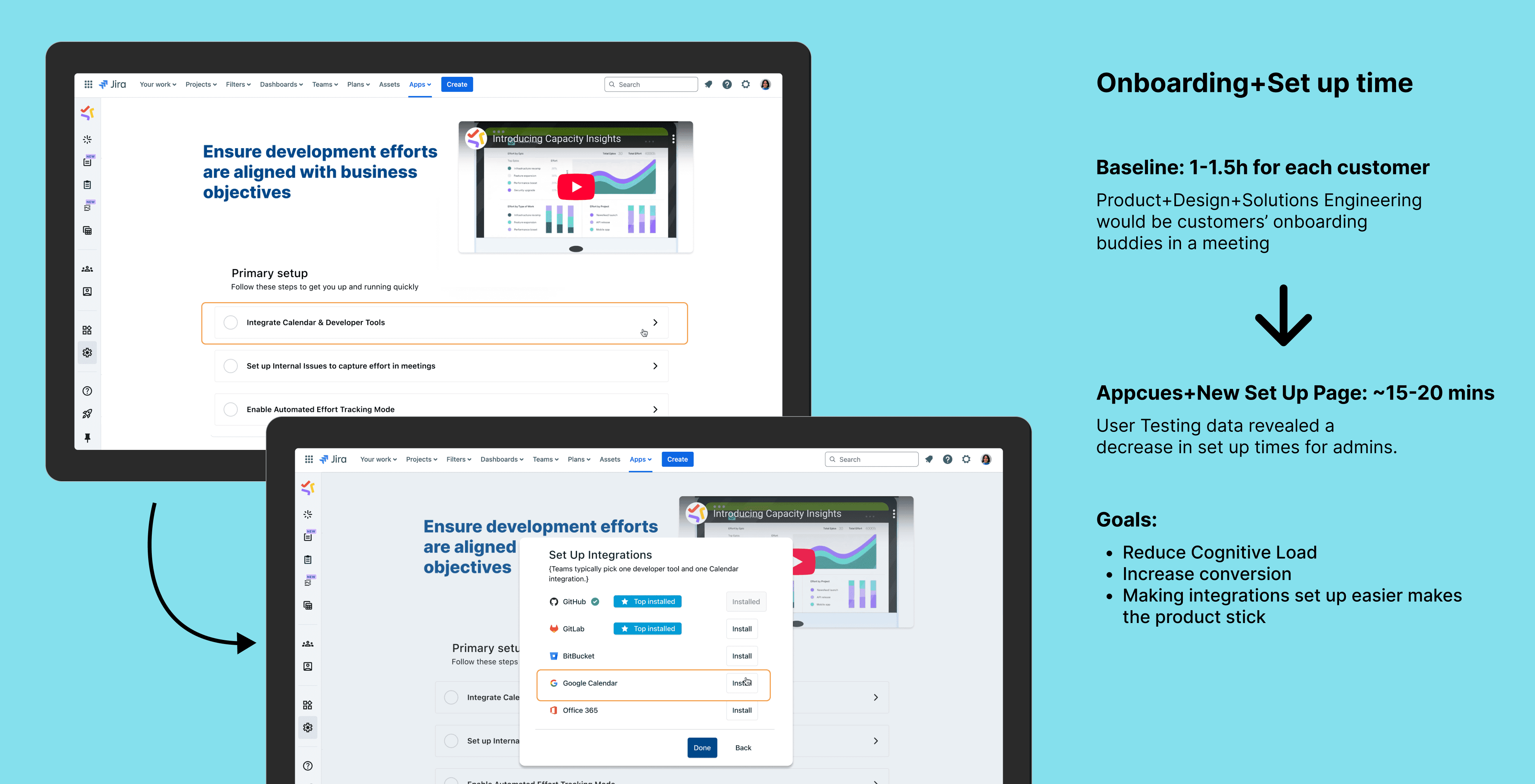
Reducing Time to Value (TTV)
I collaborated with the Growth team to build the onboarding flow together and created a strategy for the onboarding process for the product. This included mapping out which part of the flow will use Appcues, which will have in-product touchpoints, etc.
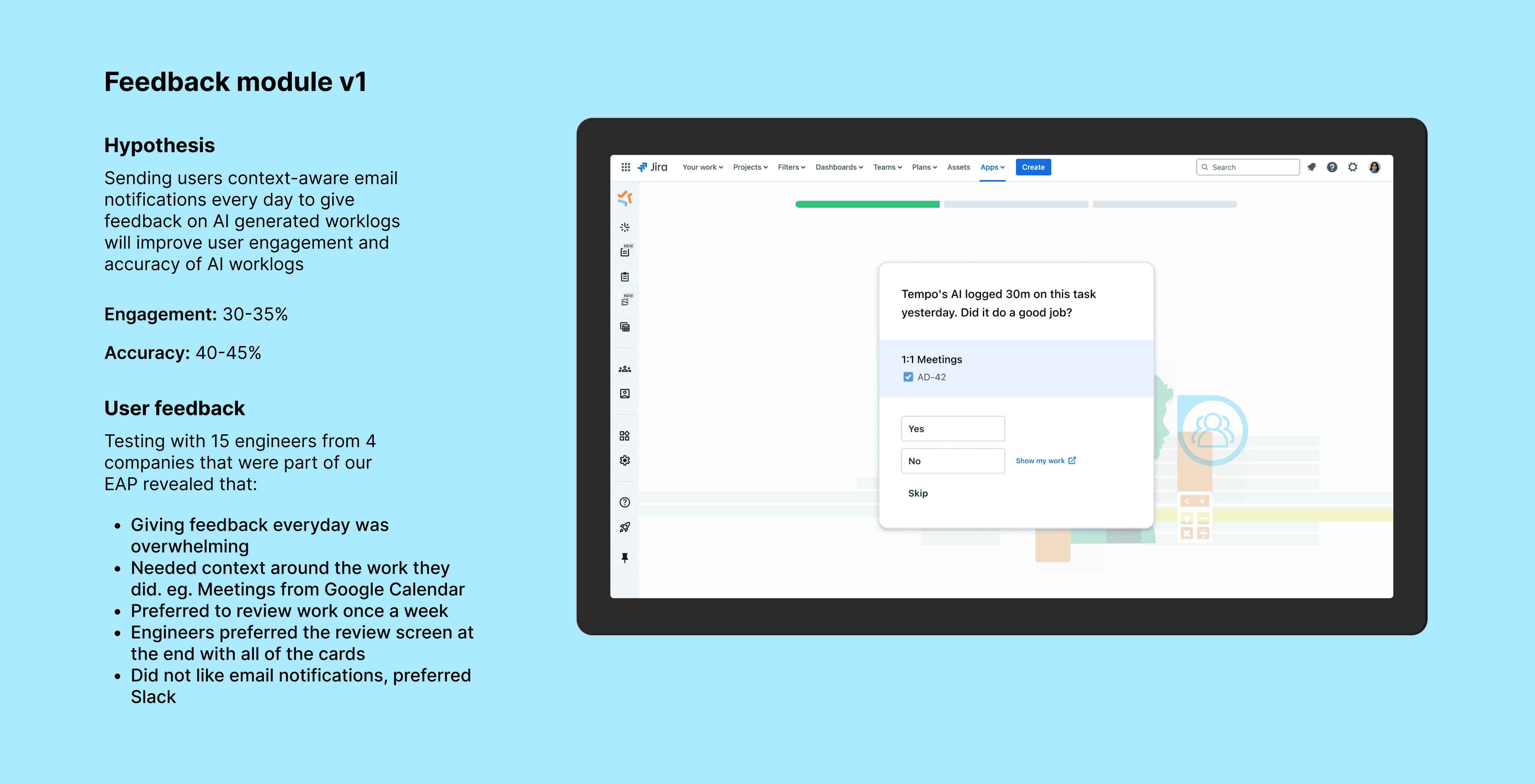
Feedback module to increase AI work entry accuracy
AI summary using Rovo
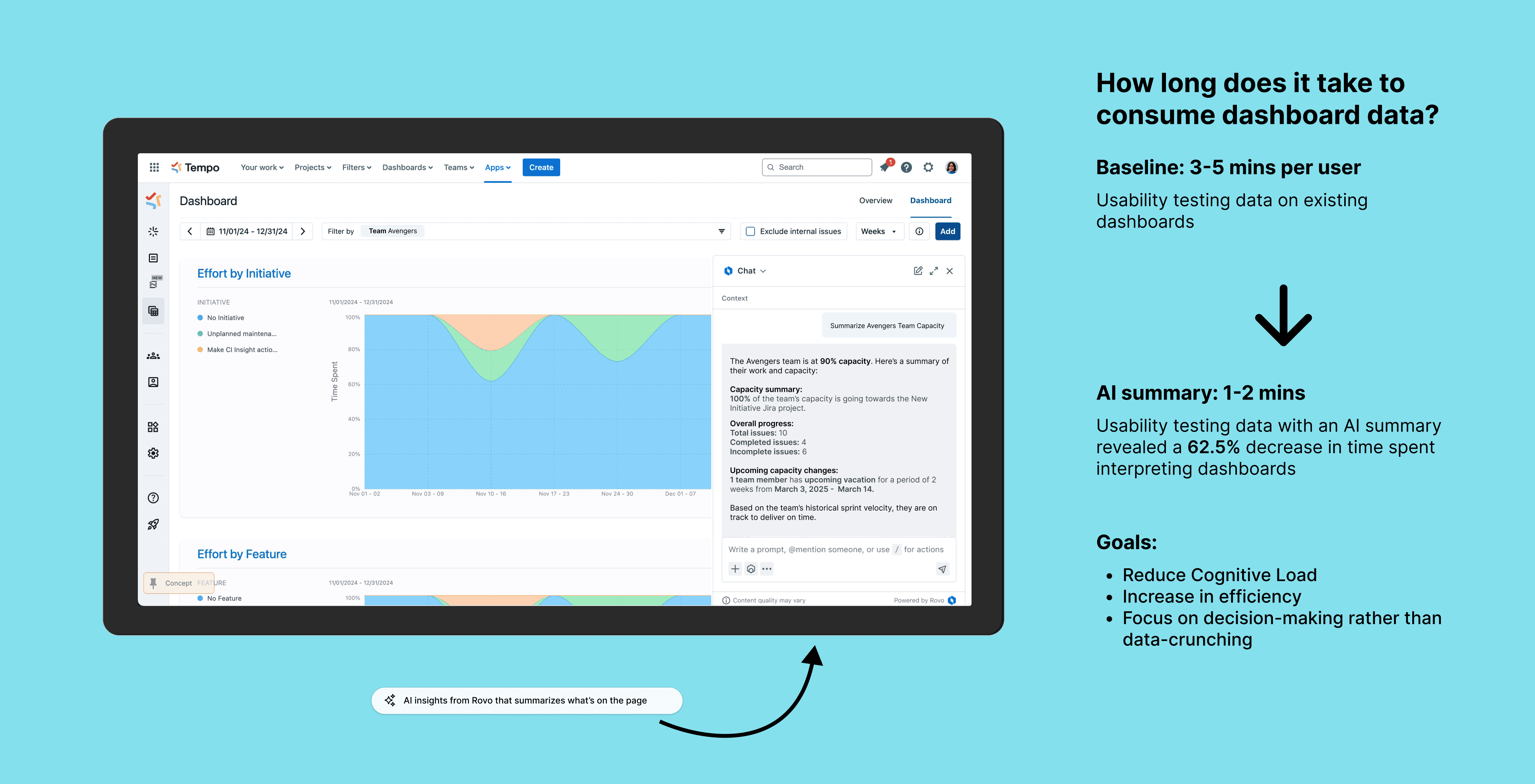
Giving AI summaries of dashboard data is the next step in Capacity Insights’ journey. Atlassian’s introduction of Rovo meant that we had to take into account whether we wanted to leverage Rovo or create our own AI summaries from scratch. This is still up in the air. However, we already have some usability testing data for existing dashboards along with a concept for Rovo integration. Customers are very keen on seeing Rovo in the Tempo suite.
Outcomes and learnings
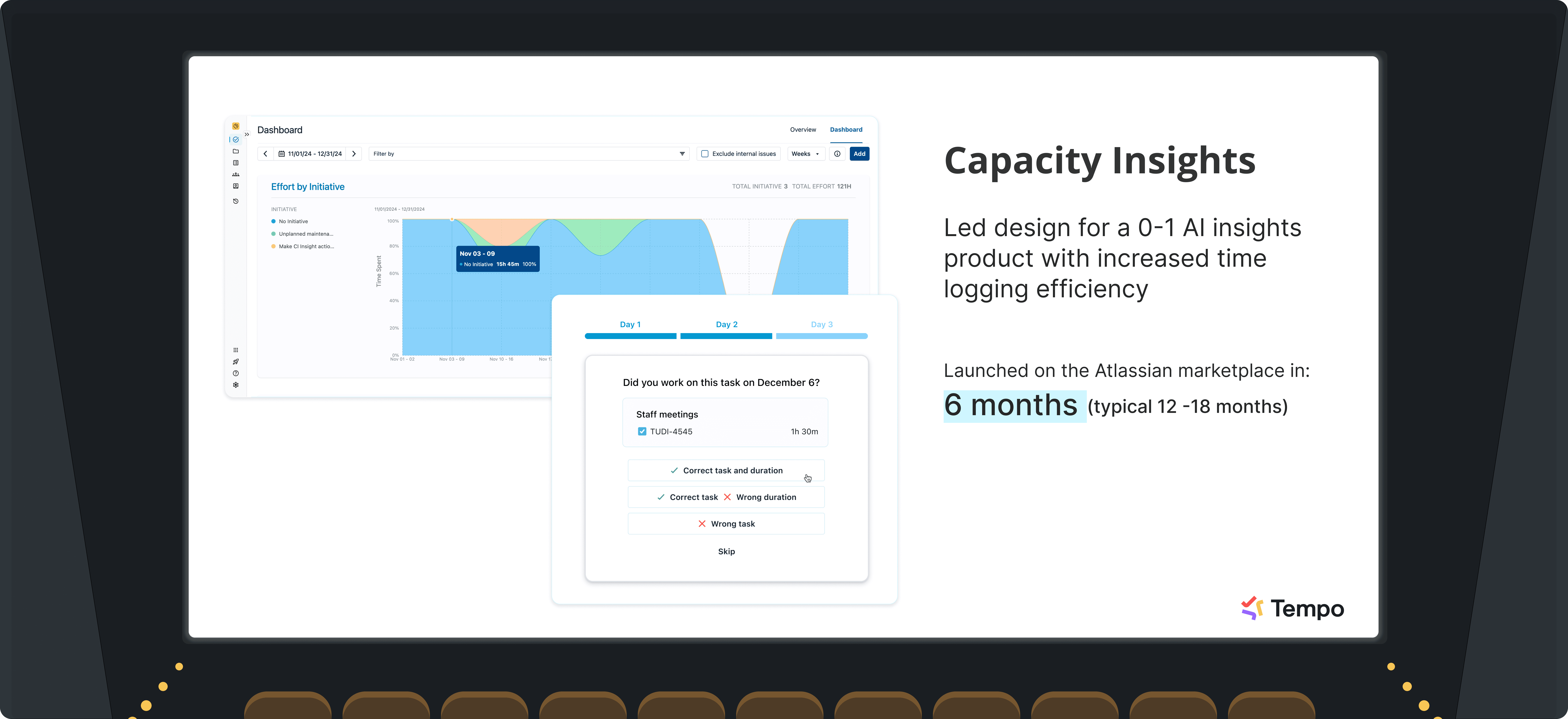
Capacity Insights shipped to the Atlassian marketplace in 6 months, against a typical baseline of 12-18 months for a net-new product at Tempo.
The four design moves landed measurable wins in usability testing and EAP studies:
Onboarding: 1.5 hours per customer → 15-20 minutes (80% reduction)
Dashboard consumption: 3-5 minutes → 1-2 minutes (62.5% reduction)
Feedback module engagement: 30-35% (v1, daily email) → 45-50% (v2, weekly Slack with context)
Feedback module accuracy: 40-45% (v1) → 65% (v2)
However, the product didn't gain traction in market and was sunsetted. The design hit its testing targets; the product didn't find its buyer at scale. Engineering managers used the tool, but VPs and C-level leaders, who held the budget, weren't asking the question Capacity Insights answered.
That diagnosis is informing my current work on a successor effort, targeting VP- and C-level buyers on engineering organizations and reframing the question around dev cycle time and the impact of AI coding tools (Claude Code, GitHub Copilot, and similar) on velocity. That question has currency in 2026 in a way "capacity insights" didn't three years ago.

