AI-driven automation
AI suggestions that make logging time easier

Problem
Timesheets users hate logging time manually because it’s time-consuming, leading to low task efficiency and user drop-off.
Solution
AI suggestions based on apps that users frequent so that they just have to review and confirm instead of filling out the entire time logging form.
The situation
Tempo’s Timesheets ecosystem serves over 500,000 active users who navigate high-frequency, mandatory time-tracking compliance workflows every single week. While logging time is critical for capitalization and organizational efficiency, it remains a repetitive task that relies entirely on human memory.
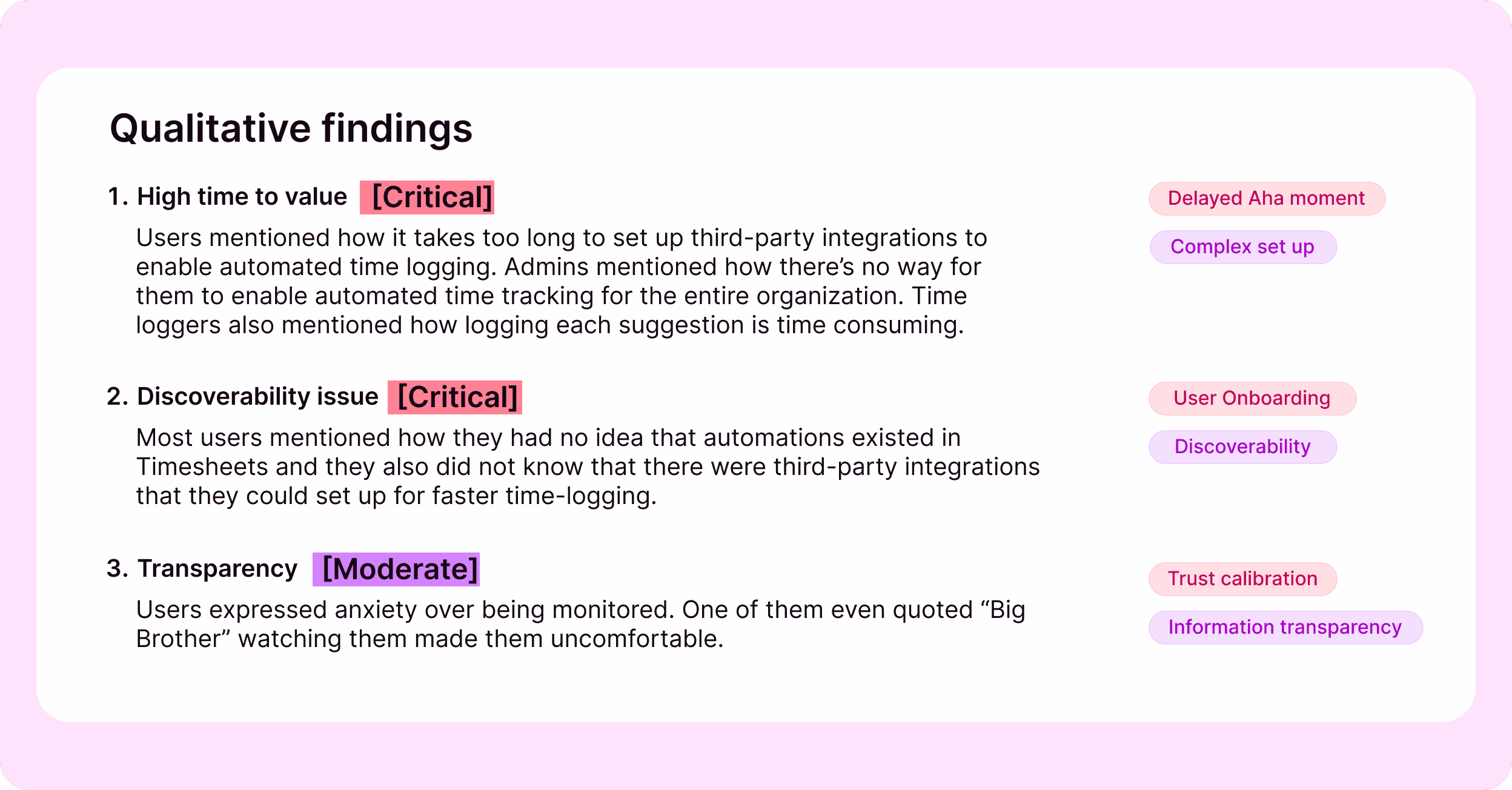
Our customers expressed frustration with the mandatory time tracking process as it added no personal value or delight, and became a major source of friction in their daily workflow. It also took time away from them doing their actual jobs. This user frustration made it clear that we needed to fundamentally shift our approach to introduce automation that could eliminate the manual burden entirely. Some third-party integrations already existed for rule-based automation but they only 2% of users had adopted it into their workflow, and most said that they didn't know they existed.

Working with real world constraints
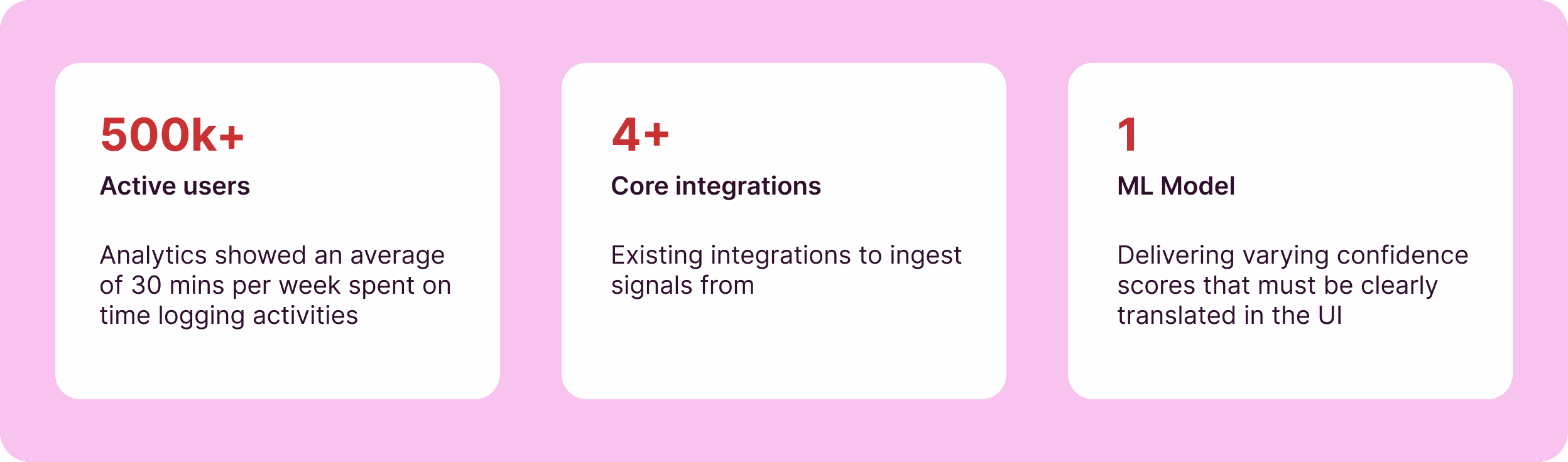
Building AI automated time-tracking required designing with strict technical and psychological guardrails. Initial discovery interviews also revealed users being afraid of "Big Brother" and AI tracking being used for performance evaluations. The system had to be architected to protect user privacy and provide them reassurances on how their data is being used.
The strategy
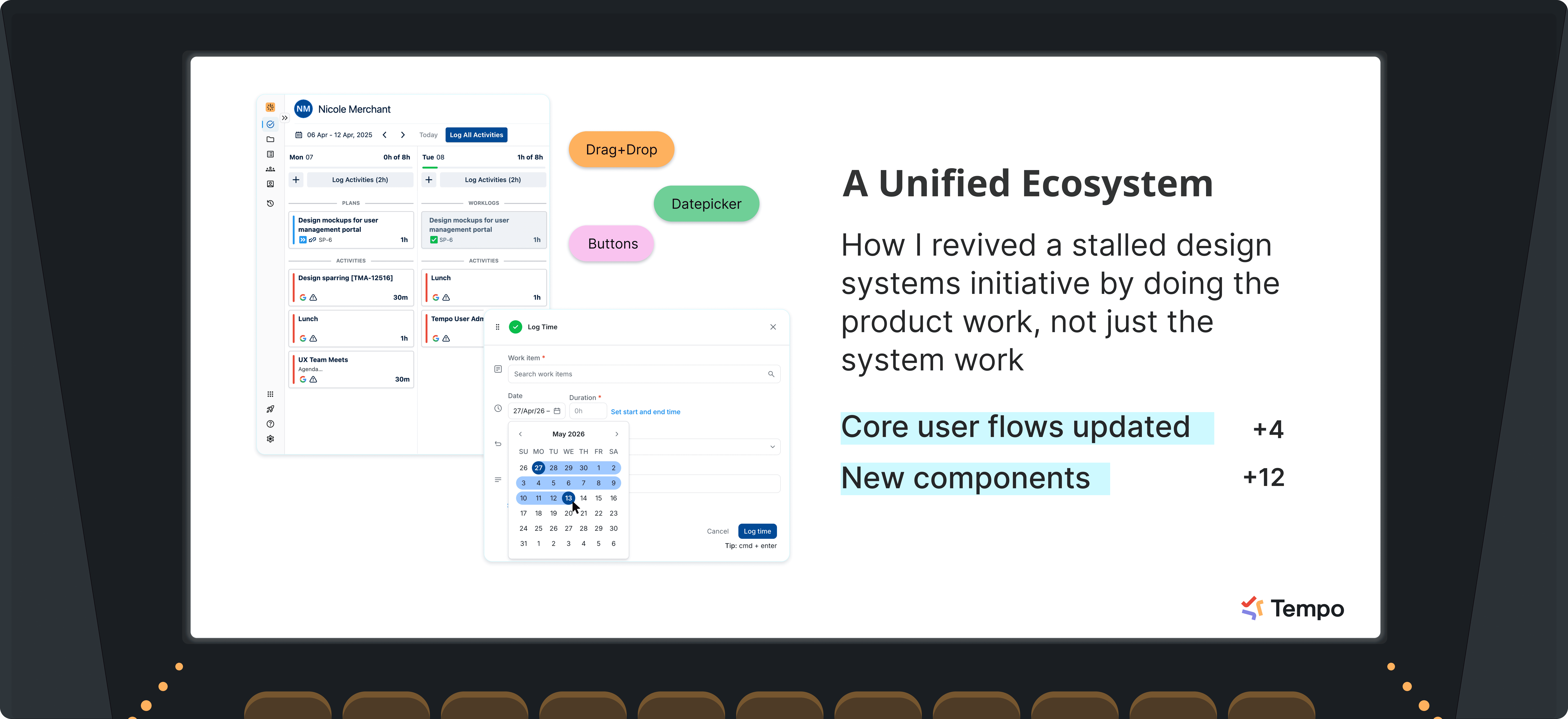
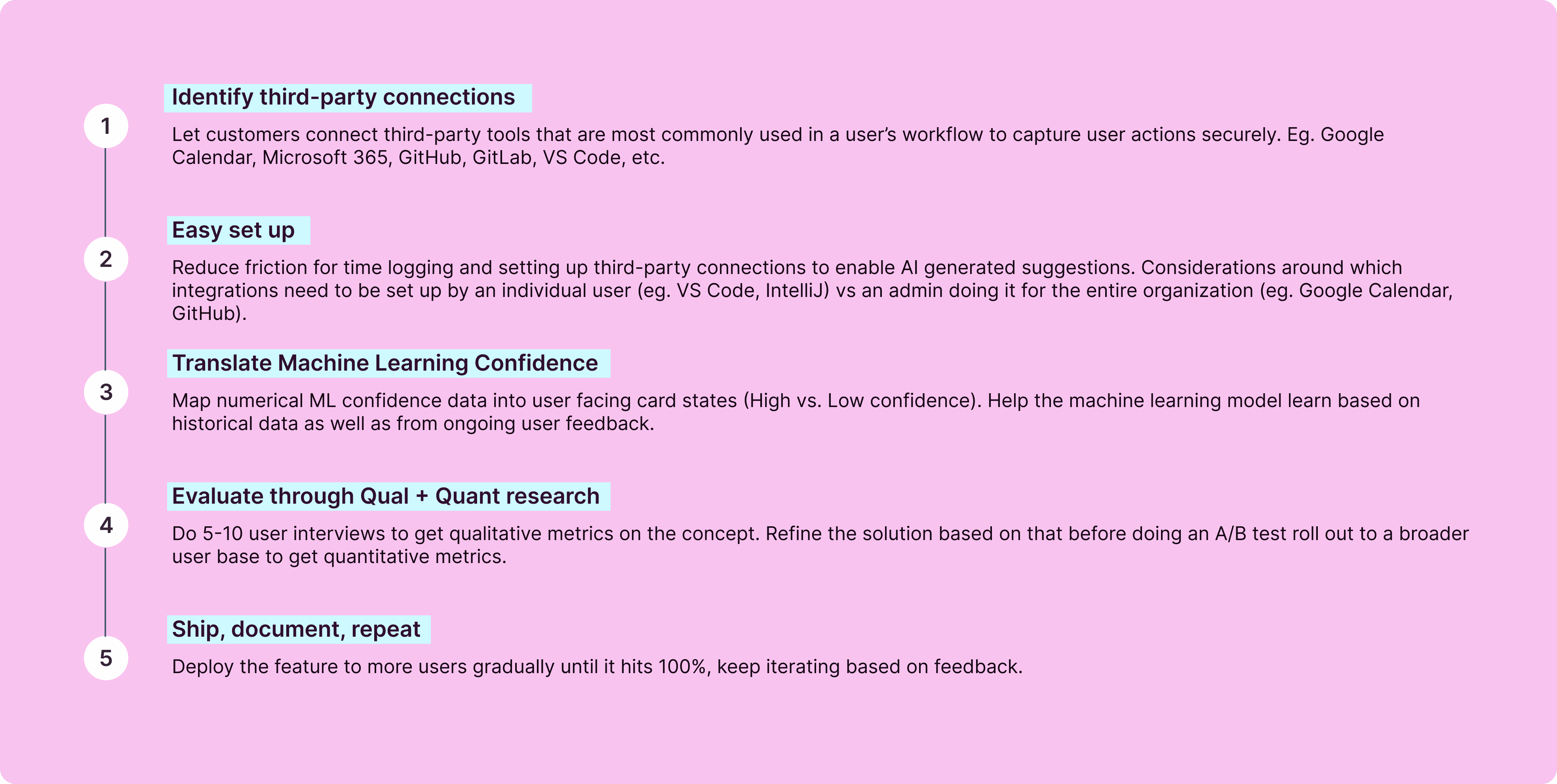
AI automated assistance fails when it forces users into an "all-or-nothing" paradigm. Instead of writing time logs for the user, the system surfaces work activities directly into their view, turning a complex data-entry task into a simple single-click verification.
Qualitative findings
I conducted interviews with current Timesheets users to understand their workflows and major pain points. This helped me understand their mental models to create a concept that I showed the same users in follow up calls to get feedback and iterate on.
A/B testing
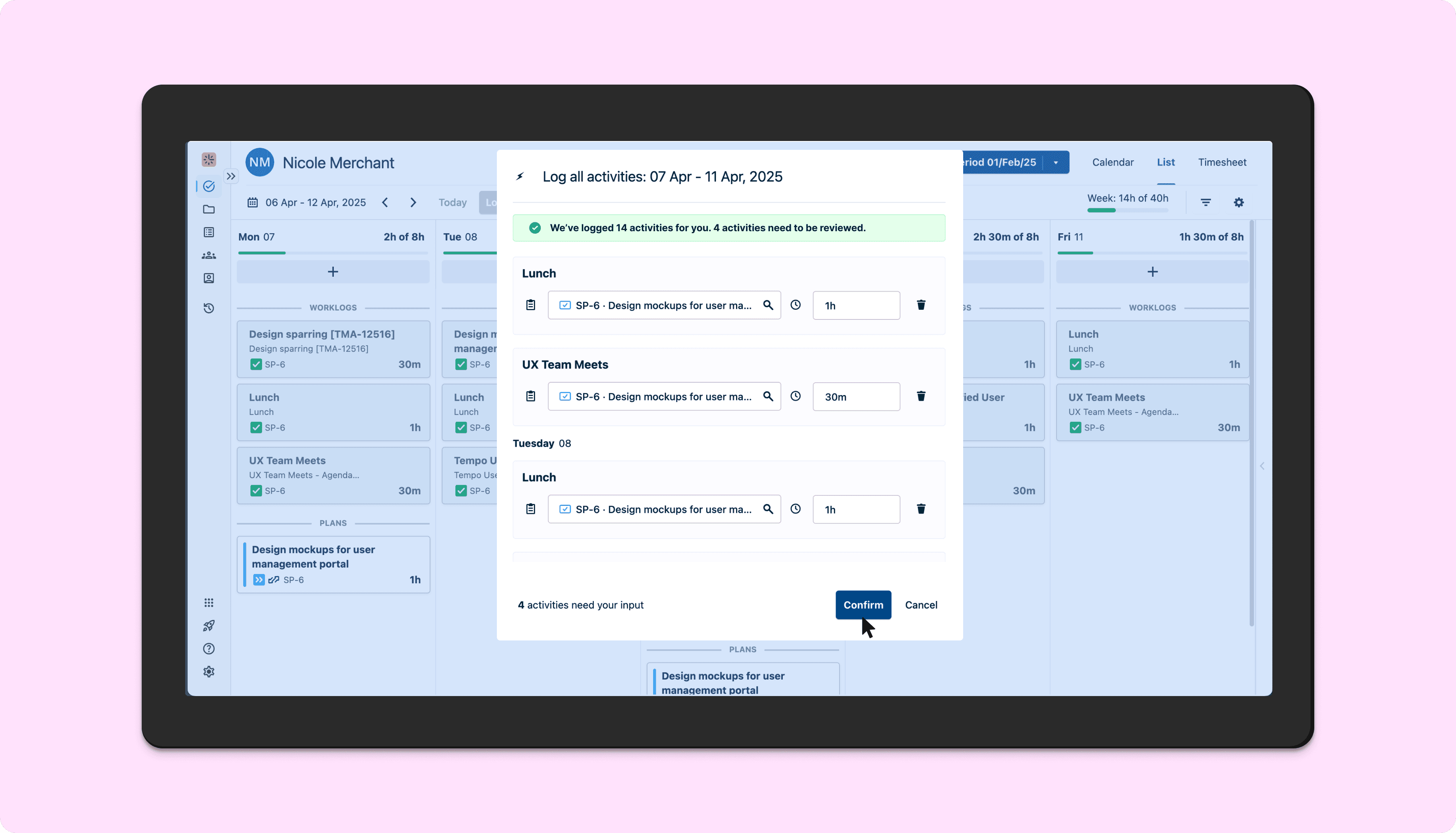
Objective: To determine if a single “Log All Activities” button for the entire work week improves user efficiency and satisfaction compared to logging each suggestion.
Hypothesis: Users who have access to a single “Log All Activities” button for the entire work week will find it more efficient and will log their activities more consistently compared to those who have to manually enter each activity.
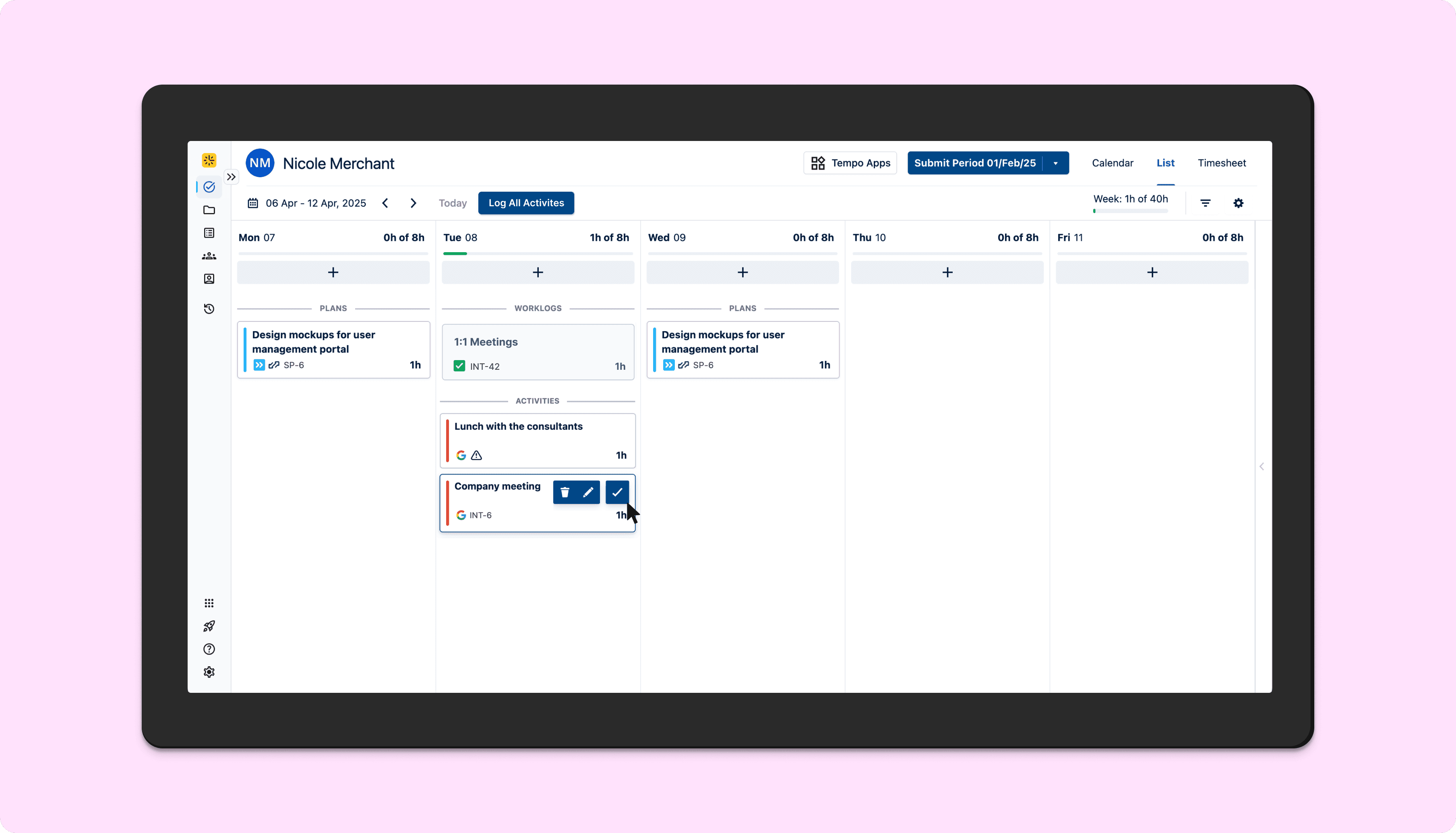
The Test: Group A (Control) will use the existing manually logging each suggestion log time flow, Group B (variant) will have a new “Log All Activities” button for the entire week. We ran the test for 6 weeks with a rollout to Tempo Labs customers (early access customers).
Group A
Group B
Phased labs release
The Goal: Track real-world adoption across heavy enterprise customers.
The Method: Deployed the automated framework behind a feature flag to our early-adopter "Labs" cohort.
The Focus: Continuously analyze production behaviors to measure long-term completion times and suggestion drop-off rates against our control group.
The Outcome: Iterating on core ingestion algorithms based on live behavior data before rolling the capability out to the broader user base.
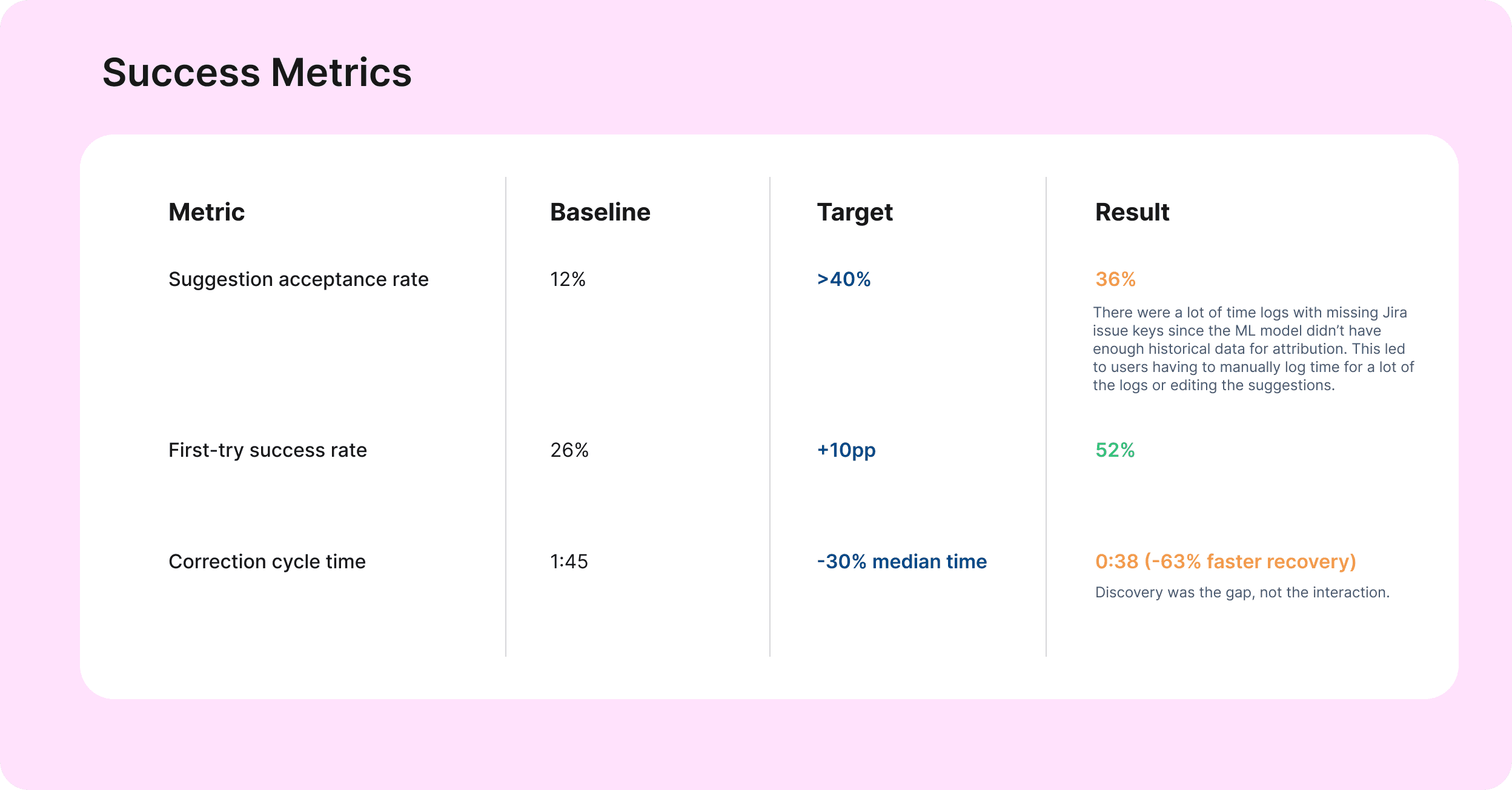
Outcome and learnings
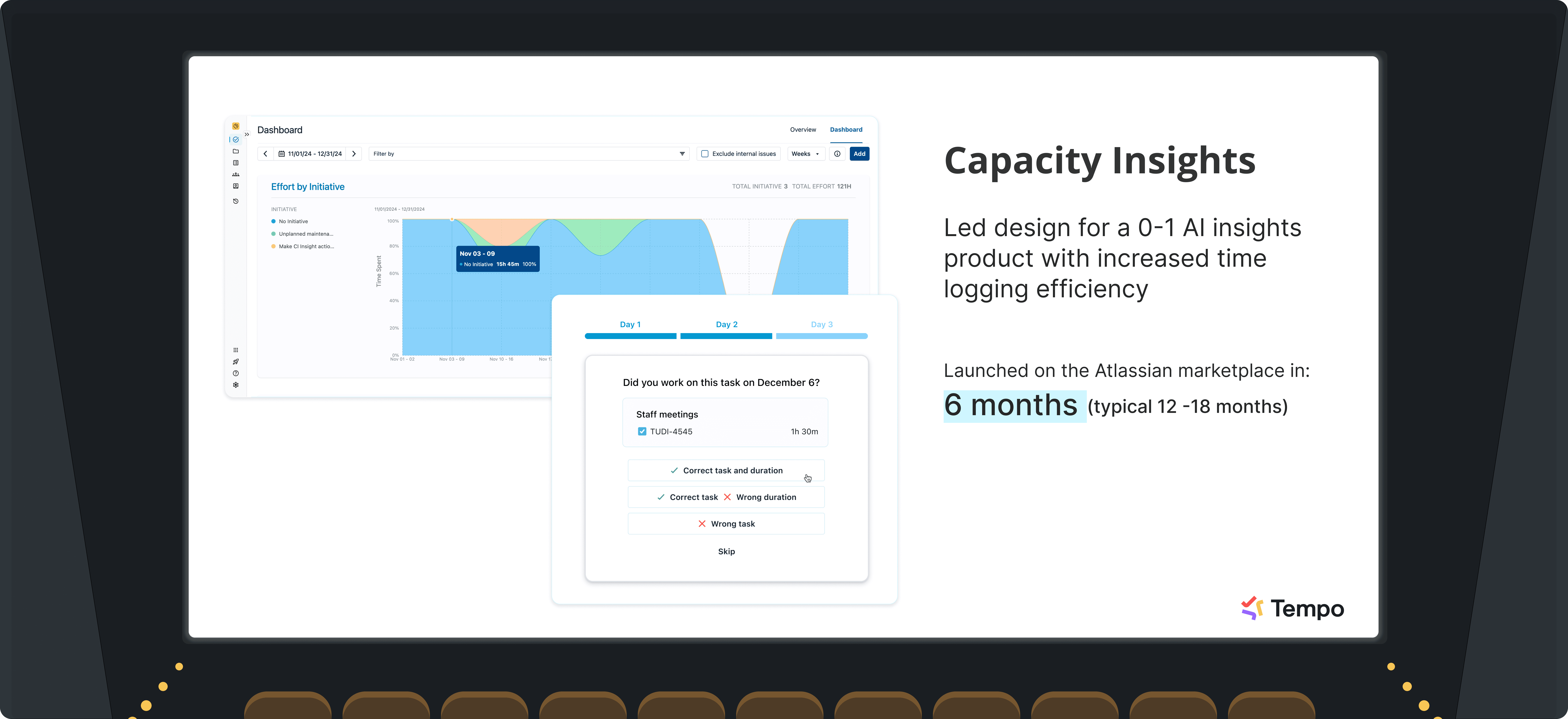
The deep-dive implementation of intelligent suggestions was a definitive test of our product-led growth (PLG) strategy. Quantitative production monitoring and usability metrics validated the dramatic impact of automated assistance on user behavior:
+95% Task Efficiency Gain: Compressed the median weekly time spent logging hours from a tedious 30 minutes down to just 1-2 minutes.
Frictionless Organization-Level Setup: Transitioning from individual user configuration to a one-time administrator integration setup effectively reduced initial cognitive load, reducing Time to Value for users.
19% Churn Mitigation: Prior to launch, critical enterprise accounts were actively threatening to churn, citing a high Time-to-Value (TTV) barrier and evaluating frictionless time tracking by competitors like Rally. By deploying the automated timeline, we stabilized at-risk cohorts, securing a +19% net lift in retention and successfully defending core enterprise revenue against aggressive competitor displacement.